
In the medical and pharmaceutical industries, the performance of syringes is crucial to ensuring patient safety and the effective delivery of medication. One important aspect of syringe performance is the force de glissement – the force required to move the plunger inside the syringe. This article will discuss the significance of Luer slip syringe glide force testing, focusing on the essais de décollement et de force de glissement, as defined in ISO 7886-1.
What is Glide Force Testing for Syringes?
Test de la force de glissement measures the force required to move the plunger inside a syringe, which is a critical parameter for evaluating syringe quality. Syringes with inconsistent glide force can result in difficulties during use, leading to discomfort for the patient or issues in delivering the correct dosage of medication. This is why Luer slip syringe glide force testing plays such a crucial role in quality control for syringes.
Why is Glide Force Important?
Le force de glissement provides important insights into the internal friction of the syringe and the interaction between the plunger and the barrel. High resistance can make the syringe harder to use, while low resistance can lead to inconsistent or unpredictable plunger movement. Both can impact the accuracy of medication delivery.
- Break Loose Force: This refers to the force needed to initiate the movement of the syringe plunger. It is important that this force is not too high to avoid user discomfort.
- Sustaining Glide Force: Once the plunger begins to move, the force required to sustain the motion is measured. This force should remain consistent to ensure smooth and reliable syringe operation.
ISO 7886-1: The Standard for Syringe Testing
ISO 7886-1 is the international standard for Luer slip syringes, specifying the requirements for the design, performance, and testing of syringes used for medical purposes. Glide force testing is a crucial component of this standard as it ensures that syringes perform consistently under expected conditions.
Break Loose and Glide Force Testing for Syringes
Break loose and glide force testing is essential in evaluating the ease of use and performance consistency of syringes. The testing procedure typically involves the following steps:
- Preparation of the Syringe: The syringe is filled with water at a specific temperature (usually around 23°C) to eliminate any air bubbles that could affect the results.
- Test Setup: The syringe is placed in a mechanical testing machine that is capable of recording the force required to move the plunger.
- Initial Measurements: The force required to break the initial friction (break loose force) is recorded as the plunger is first moved.
- Sustained Movement: The test machine continues to apply force to move the plunger and records the sustaining glide force over the entire length of travel.
- Recording Results: The force data is then analyzed to determine the break loose force, the average glide force, and the maximum force experienced during the test.
This data is crucial for ensuring that the syringe performs within the specified parameters defined in ISO 7886-1.
Why Conduct Glide Force Testing on Luer Slip Syringes?
Luer slip syringes are commonly used in the healthcare industry, and their performance is vital to ensure both user comfort and accurate medication delivery. The following are key reasons why test de la force de glissement de la seringue is important:
Ensures Comfortable and Smooth Use
High or erratic glide force can lead to discomfort for the healthcare provider or patient. Syringes that glide too roughly or require excessive force to operate are not ideal, as they can create resistance that may cause difficulty when administering injections or drawing fluids. Proper glide force ensures a smooth and predictable operation, making it easier to use syringes in medical settings.
Guarantees Accuracy of Medication Delivery
Syringes with consistent glide force are more reliable in their function. This consistency helps to ensure that the correct dosage is administered every time, reducing the chances of over- or under-delivery of medication.
Quality Control and Regulatory Compliance
For manufacturers, glide force testing is a crucial part of the quality control process. By adhering to ISO 7886-1, manufacturers can ensure that their syringes meet international standards and regulatory requirements, which is essential for gaining approval from health authorities and ensuring patient safety.
The Role of the Cell Instruments PER-01 Syringe Testing System
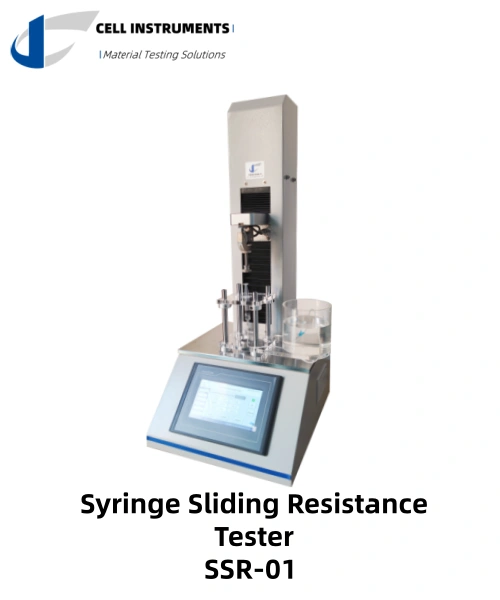
For companies involved in the manufacturing of Luer slip syringes, using a reliable testing machine is essential to maintain consistent quality. The Cell Instruments PER-01 Syringe Testing System offers a precise and efficient solution for glide force testing, ensuring that all syringes meet the required standards for smooth and reliable operation.
Le PER-01 Syringe Testing System can be used to measure both se détacher et glisser force according to ISO 7886-1 specifications. It provides accurate, repeatable results that are essential for maintaining the quality and consistency of syringe products.
Conclusion
Luer slip syringe glide force testing is an essential part of ensuring that syringes perform reliably and comfortably. With testing methods defined by ISO 7886-1, manufacturers can ensure that their products meet international standards and are safe for use in medical applications. Regular testing of both se détacher et glisser force is vital for providing syringes that are easy to use, precise, and consistent. The Cell Instruments PER-01 Syringe Testing System offers an excellent solution for automating and ensuring accurate glide force measurements in compliance with global standards, ultimately promoting better patient care and regulatory compliance.
 FR
FR  EN
EN  AR
AR  BG
BG  CS
CS  DA
DA  DE
DE  EL
EL  ES
ES  ET
ET  FI
FI  HU
HU  ID
ID  IT
IT  JA
JA  KO
KO  LT
LT  LV
LV  NB
NB  NL
NL  PL
PL  PT
PT  RO
RO  RU
RU  SK
SK  SL
SL  SV
SV  TR
TR  UK
UK